Why Fruit Fly Traps Don't Work (And Actually Make the Problem Worse)
Share
The Hidden Problem with Traditional Fruit Fly Traps
If you've ever dealt with a fruit fly infestation, you've probably reached for a trap as your first line of defense. But here's what most people don't realize: traditional fruit fly traps can actually attract more fruit flies into your home and worsen your problem.
In this article, we'll explore the science behind why traps fail, how they can backfire, and why deterrent-based solutions offer a smarter, more effective approach to fruit fly control.
How Fruit Fly Traps Actually Work (And Why That's a Problem)
Most fruit fly traps rely on attractants—sweet, fermented substances like apple cider vinegar, wine, or fruit juice—to lure fruit flies in. According to research published in the Journal of Economic Entomology, fruit flies (Drosophila melanogaster) are drawn to volatile compounds produced during fermentation, particularly acetic acid and ethanol.
While this might sound like an effective strategy, there's a critical flaw: these attractants don't discriminate between fruit flies already in your home and those outside.
The Attraction Radius Problem
Research from the USDA Agricultural Research Service shows that fruit flies can detect food sources from significant distances. When you place an attractant-based trap in your kitchen, you're essentially broadcasting a dinner invitation to every fruit fly in the vicinity—not just the ones already bothering you.
This creates a paradox: the trap designed to eliminate your fruit fly problem may actually be drawing new fruit flies into your environment from outdoors, neighboring units, or other areas of your home.
Why Traps Often Fail to Solve the Root Problem
1. They Don't Address Breeding Sites
According to the Centers for Disease Control and Prevention (CDC), fruit flies can complete their entire life cycle—from egg to adult—in as little as 8-10 days under optimal conditions. A single female can lay up to 500 eggs in her lifetime.
Traps only capture adult fruit flies. They do nothing to eliminate the eggs and larvae developing in your drains, garbage disposals, overripe produce, or other breeding sites. This means that even if your trap catches dozens of flies, hundreds more may be developing just out of sight.
2. Incomplete Capture Rates
No trap captures 100% of fruit flies. Studies on insect trapping efficiency, including research from the Environmental Protection Agency (EPA), show that even well-designed traps have limitations in capture rates, especially in environments with competing food sources.
If you have ripe fruit on your counter or residue in your sink drain, fruit flies may choose those sites over your trap—allowing the population to continue growing.
3. Continuous Attractant Effect
As long as the trap remains active, it continues to emit attractant signals. This means you're maintaining a constant "come here" signal for fruit flies, potentially sustaining the problem rather than solving it.
The Deterrent Approach: A Smarter Solution
Unlike traps that attract pests, deterrents work by making your environment uninhabitable or unappealing to fruit flies. This is a fundamentally different—and more effective—approach to pest control.
How Deterrents Work
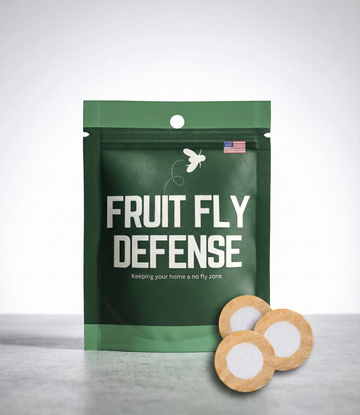
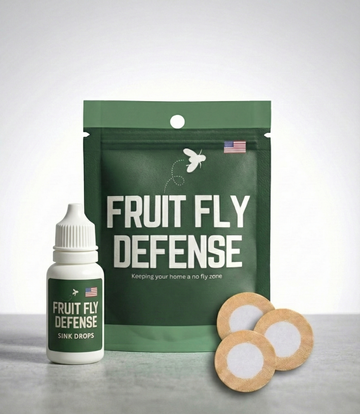
Plant-based deterrents, like those offered by Fruit Fly Defense, use natural compounds that fruit flies find repellent. These products create an invisible barrier that:
- Repels fruit flies rather than attracting them
- Prevents breeding in treated areas like drains and disposal units
- Breaks the life cycle by making your home inhospitable to eggs and larvae
- Provides long-lasting protection without the need for constant monitoring
The Science Behind Natural Deterrents
Research published in scientific journals has demonstrated that certain plant-derived compounds—including essential oils from herbs and citrus—have repellent properties against Drosophila species. These natural substances interfere with the fruit fly's ability to detect food sources and suitable breeding sites.
By using deterrents strategically in high-risk areas (drains, garbage disposals, compost bins), you create an environment where fruit flies simply don't want to be—and more importantly, you're not inviting new ones in.
Why Fruit Fly Defense Uses Only Deterrents
At Fruit Fly Defense, we've made a conscious decision to focus exclusively on deterrent-based solutions. Here's why:
- No attraction paradox: Our products repel fruit flies rather than drawing them in
- Addresses root causes: By treating drains and breeding sites, we stop the problem at its source
- Safe for food areas: Plant-based formulas are non-toxic and safe to use in kitchens and food prep areas
- Long-lasting protection: Deterrents provide ongoing prevention, not just one-time capture
- Environmentally responsible: No toxic chemicals, no waste from disposable traps
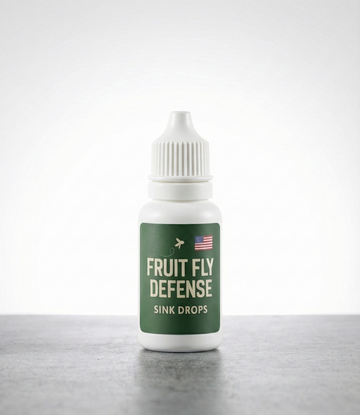
Our Starter Pack and Sink Drops are specifically designed to create an inhospitable environment for fruit flies in the places they breed most—your drains and disposal units.
Best Practices for Fruit Fly Prevention
For the most effective fruit fly control, combine deterrent products with these proven practices:
- Eliminate breeding sites: Clean drains regularly, dispose of overripe produce, and keep garbage sealed
- Use deterrents preventively: Apply products to drains and high-risk areas before you see fruit flies
- Maintain cleanliness: Wipe down counters, clean up spills immediately, and don't leave dirty dishes overnight
- Store produce properly: Refrigerate ripe fruit or keep it in sealed containers
- Take out trash regularly: Don't let organic waste accumulate
The Bottom Line
Traditional fruit fly traps might seem like a quick fix, but they often create more problems than they solve by attracting additional fruit flies into your space. The science is clear: attractant-based approaches can perpetuate the very problem you're trying to eliminate.
Deterrent-based solutions offer a smarter, more sustainable approach. By making your environment uninhabitable to fruit flies and addressing breeding sites directly, you can achieve lasting results without the risk of attracting more pests.
Ready to try a better approach? Explore our complete line of plant-based fruit fly deterrents and experience the difference that science-backed, prevention-focused solutions can make.
All Fruit Fly Defense products are made in the USA with plant-based, non-toxic ingredients that are safe for use around food preparation areas. Learn more about our commitment to effective, environmentally responsible pest control.