Why Fruit Fly Traps Don't Work (And What Actually Does)
Share
You've tried the apple cider vinegar trick. You've bought the sticky traps from the store. Maybe you even invested in one of those fancy UV light zappers. And yet, here you are—still watching fruit flies hover around your kitchen like they own the place.
If you're feeling frustrated, defeated, or just plain confused about why nothing seems to work, you're not alone. Thousands of people go through this exact cycle every single day. They try trap after trap, catch dozens of flies, and still wake up to more the next morning.
Here's what nobody tells you when you're standing in the pest control aisle: traps aren't designed to solve your fruit fly problem. They're designed to catch flies. And those are two very different things.
Why Traps Fail: The Uncomfortable Truth
Let's be clear about what traps actually do. Whether it's a homemade vinegar solution or a $20 store-bought device, traps catch adult fruit flies. That's it. That's all they do.
And yes, they can be quite good at it. You might catch 10, 20, even 50 flies in a single trap. It feels productive. It feels like you're making progress.
But here's the problem: while you're catching those adult flies, their eggs are hatching.
Fruit fly traps do absolutely nothing about:
• The eggs already laid in your drains
• The larvae developing in hidden organic matter
• The breeding sites that keep producing new flies
• The next generation that's 24-48 hours away from adulthood
You're not solving the infestation. You're just managing the visible symptoms while the real problem continues unchecked beneath the surface.
The Math That Explains Your Frustration
Let's talk numbers, because this is where the trap approach completely falls apart.
According to University of Kentucky entomology research, a single female fruit fly can lay up to 500 eggs during her lifetime. Those eggs hatch in 24-30 hours. The larvae mature into breeding adults in about a week.
So let's say you catch 10 adult flies in your trap today. Sounds good, right?
But if just 2 of those flies were females who had already laid eggs before you caught them, you're looking at up to 1,000 eggs developing right now. Even if only 10% of those survive to adulthood, that's 100 new flies within a week.
Now you understand why it feels endless. You're not keeping up with the reproduction rate. You're catching flies from last week's generation while this week's generation is already developing.
It's like bailing water out of a boat while ignoring the hole in the hull. You might remove some water, but you're never going to solve the fundamental problem.
What Traps DON'T Do (And Why That Matters)
To really understand why traps fail, you need to know what a complete fruit fly solution actually requires:
Traps Don't Stop Breeding
The most critical failure of traps is that they don't address breeding sites. Your drains, trash cans, and other organic matter accumulation points continue to provide perfect environments for fruit fly reproduction. Catching adults does nothing to change this.
Traps Don't Address Drains
This is huge. The #1 breeding ground for persistent fruit fly infestations is your kitchen and bathroom drains. The biofilm that develops in pipes is a fruit fly paradise—warm, moist, and full of organic nutrients. Traps can't reach these areas, can't clean them, and can't prevent flies from breeding there.
Traps Don't Prevent New Flies
Traps are reactive by nature. They wait for flies to appear, then try to catch them. But fruit flies can enter your home from outside, emerge from drains, or hatch from eggs in hidden locations. A trap-only approach means you're always playing defense, never getting ahead of the problem.
Traps Don't Make Your Space Uninhabitable for Flies
Here's the key insight: traps try to remove flies from your space. Deterrents make your space somewhere flies don't want to be.
That's a fundamental difference in approach. One is reactive and endless. The other is proactive and preventative.
The Alternative: Deterrents That Actually Work
So if traps don't work, what does?
The answer is deterrents—specifically, solutions that make your home an inhospitable environment for fruit fly breeding and habitation.
Unlike traps, which wait for flies to show up, deterrents prevent the problem from starting in the first place. According to EPA integrated pest management principles, prevention-based approaches are more effective and sustainable than reactive control methods.
Deterrents work by:
Eliminating breeding sites rather than just catching adults
Breaking down organic matter that flies need to reproduce
Creating sensory barriers that repel flies from treated areas
Disrupting the reproductive cycle at the source
When you use a deterrent approach, you're not just managing symptoms. You're actually solving the underlying problem.
How Essential Oil-Based Deterrents Work
One of the most effective deterrent strategies involves essential oils—but not in the way most people think.
Fruit flies rely heavily on their sense of smell to locate food sources and breeding sites. They're attracted to the scent of fermenting organic matter, which signals a good place to lay eggs.
Research has shown that certain essential oils—particularly peppermint and citrus oils—create a sensory environment that completely confuses and overwhelms fruit flies. The concentrated scent doesn't just repel them; it actually interferes with their ability to locate breeding sites and food sources.
Think of it like this: if you walked into a room where the smell was so overpowering you couldn't think straight, you'd leave. That's what properly formulated essential oil deterrents do to fruit flies.
But here's the critical part: the oils need to be applied where flies actually breed, not just where you see them flying around. That means treating drains, cleaning surfaces with oil-based solutions, and creating barriers in problem areas.
A few drops of peppermint oil in a diffuser won't cut it. You need targeted application at the source of the problem.
The Two-Pronged Approach That Actually Solves the Problem
The most effective fruit fly solution combines two strategies:
1. Treat the Drains
This is non-negotiable. Your drains are almost certainly the primary breeding ground for persistent infestations. You need a solution that:
• Breaks down the organic biofilm where flies lay eggs
• Creates a deterrent barrier that prevents new breeding
• Works consistently with regular application
• Uses natural ingredients that are safe for your plumbing and your home
Weekly drain treatment should be as routine as taking out the trash. It's the foundation of any successful prevention strategy.
2. Deter from Surfaces
Once you've addressed the drains, you need to create an inhospitable environment on surfaces where flies might land or explore for food sources:
• Kitchen counters and sinks
• Around trash and recycling areas
• Near fruit bowls or produce storage
• Bathroom surfaces and fixtures
Using essential oil-based cleaning solutions or deterrent sprays in these areas creates a sensory barrier that keeps flies away while also breaking down any organic residue that might attract them.
Together, these two approaches eliminate breeding sites and prevent new infestations. You're not just catching flies—you're making your home a place where fruit flies can't thrive.
Why Fruit Fly Defense Exists
Here's a bit of our story: Fruit Fly Defense was created because traps weren't working.
Our founder dealt with the same frustration you're experiencing. Tried the vinegar traps, bought the store solutions, caught plenty of flies... and still woke up to more every morning. The trap-and-repeat cycle was maddening.
That's when the research began. Why weren't traps working? What were they missing? And most importantly, what would actually solve the problem?
The answer was clear: you can't trap your way out of a fruit fly infestation. You have to prevent breeding at the source.
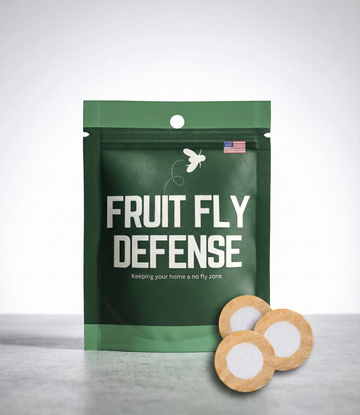
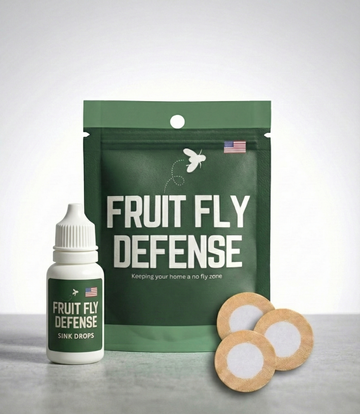
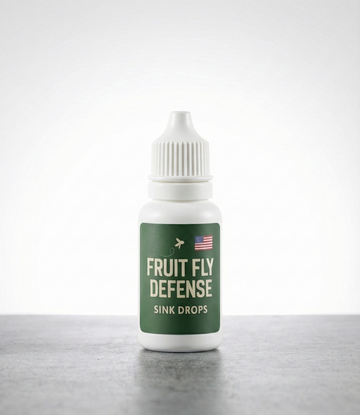
So we developed a deterrent-based solution using plant-based essential oils that target the actual breeding grounds—specifically drains, where most persistent infestations originate. Not a trap. Not a reactive solution. A prevention system that addresses the root cause.
Because we're not a trap company. We're a deterrent company. And that difference matters.
What to Do Right Now
If you're tired of the trap cycle and ready for a solution that actually works, here's your action plan:
1. Stop relying on traps as your primary solution. They might catch some flies, but they're not solving your problem.
2. Identify your breeding sites. Check all drains—kitchen, bathroom, utility sinks. Look for organic matter accumulation in trash areas, under appliances, and in other hidden spots.
3. Implement a drain treatment routine. This is the most important step. Consistent weekly treatment of drains eliminates the primary breeding ground.
4. Use deterrent-based surface treatments. Essential oil solutions on counters, sinks, and problem areas create barriers that prevent flies from exploring and breeding.
5. Maintain the routine. Prevention only works if you're consistent. Make drain treatment and deterrent application part of your regular cleaning schedule.
The Bottom Line
Fruit fly traps don't work because they're solving the wrong problem. They catch flies, but they don't stop breeding. They're reactive when you need to be proactive. They manage symptoms when you need to address the cause.
Deterrents work because they make your home uninhabitable for fruit flies. They eliminate breeding sites, disrupt reproduction, and prevent new infestations from starting.
It's the difference between endlessly bailing water and actually fixing the leak.
If you're ready to stop the trap-and-repeat cycle and try a prevention approach that actually works, explore our Fruit Fly Defense products. They're designed specifically for people who are done with traps and ready for real solutions.
Because you shouldn't have to live with fruit flies. And with the right approach, you don't have to.