Restaurant Health Code Violations: The Hidden Cost of Fruit Flies in 2026
Share
Why Fruit Flies Are More Than Just a Nuisance in Commercial Kitchens
A single fruit fly sighting during a health inspection can trigger a cascade of consequences for your restaurant, bar, or commercial kitchen. According to the FDA Food Code, the presence of insects in food preparation areas is classified as a critical violation—one that can result in immediate point deductions, mandatory re-inspections, and in severe cases, temporary closure.
But the real cost goes far beyond the inspection report. Let's break down what fruit flies are actually costing your business and how to eliminate them permanently.
The True Cost of Fruit Flies in Commercial Food Service
1. Health Department Violations and Fines
Research from the National Restaurant Association shows that pest-related violations are among the top five most common critical violations cited during health inspections. The financial impact includes:
- Initial violation fines: $200-$1,000 depending on jurisdiction
- Re-inspection fees: $100-$500 per follow-up visit
- Mandatory remediation costs: Professional pest control contracts averaging $150-$400/month
- Lost revenue during closure: $2,000-$10,000+ per day for forced shutdowns
2. Reputation Damage in the Digital Age
In 2026, health inspection scores are publicly posted online in most jurisdictions. A study by Harvard Business Review found that a one-star decrease in health rating can reduce revenue by 5-9%. When customers see fruit flies mentioned in reviews or inspection reports:
- Online review ratings drop an average of 0.5-1.5 stars
- Social media amplifies negative experiences (one TikTok video can reach thousands)
- Recovery time averages 6-12 months even after the problem is resolved
3. Product Loss and Contamination
According to CDC guidelines, any food product that has come into contact with fruit flies must be discarded. For bars and restaurants, this means:
- Fresh produce waste: $50-$200 per week during active infestations
- Contaminated garnishes and bar fruit: $30-$100 per week
- Open beverage containers and syrups: $40-$150 per incident
- Prepared foods requiring disposal: $100-$500+ depending on volume
Why Traditional Pest Control Fails in Commercial Kitchens
Most restaurants rely on monthly pest control services, but according to National Pest Management Association data, fruit flies require a different approach than other pests:
The problem with conventional methods:
- Chemical sprays are prohibited in active food prep areas and can contaminate surfaces
- Monthly service intervals are too infrequent given fruit flies' 7-10 day reproduction cycle
- Traps alone don't address breeding sites in drains, floor drains, and beverage stations
- Generic solutions aren't designed for the unique challenges of commercial kitchens
The Integrated Approach: How Top Restaurants Stay Fruit Fly-Free
Research published in the Journal of Economic Entomology demonstrates that integrated pest management (IPM) combining sanitation, exclusion, and targeted control achieves 95%+ effectiveness in commercial settings.
Phase 1: Eliminate Breeding Sites (Critical for Compliance)
High-risk areas in commercial kitchens:
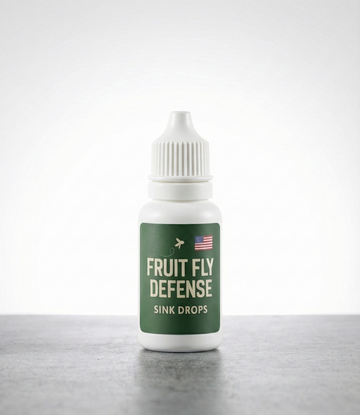
- Floor drains and sink drains: The #1 breeding site in 80% of commercial infestations. Our SINK DROPS use food-safe enzymatic action to break down organic buildup where fruit flies lay eggs—without harsh chemicals that violate food safety protocols.
- Beverage stations: Soda guns, beer taps, and syrup lines accumulate sugary residue
- Produce storage: Even refrigerated areas can harbor fruit fly eggs on incoming produce
- Trash and recycling areas: Especially bottle/can recycling with beverage residue
Phase 2: Deploy Professional-Grade Traps
Unlike consumer products, commercial kitchens need solutions that work in high-temperature, high-humidity environments with constant food odors competing for attention.
Our POWER UP PACK is designed specifically for commercial applications:
- Multiple deterrent stations for comprehensive coverage
- Professional-strength attractant that outcompetes food odors
- Discreet design suitable for front-of-house bar areas
- Extended effectiveness for busy commercial environments
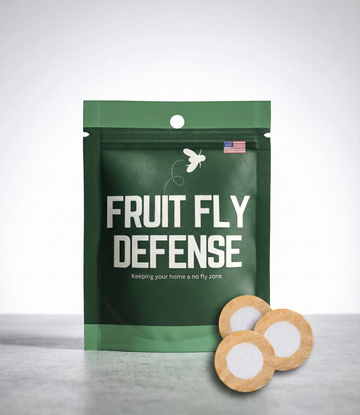
For smaller operations or targeted problem areas, the STARTER PACK provides effective control for prep kitchens, server stations, and back-of-house areas.
Phase 3: Ongoing Prevention Protocol
The ServSafe certification program emphasizes that pest prevention must be continuous, not reactive. Establish these protocols:
- Daily drain maintenance: Weekly enzymatic treatments prevent biofilm accumulation
- Produce inspection: Check all incoming deliveries before storage
- Immediate spill cleanup: Train staff on the 2-minute rule for any beverage or food spills
- Nightly closing checklist: Include drain flushing, trash removal, and trap inspection
Why Plant-Based Solutions Meet Commercial Food Safety Standards
According to FDA retail food protection guidelines, any pest control product used in food preparation areas must be food-safe and properly labeled for commercial use.
Our complete line is formulated specifically for commercial food service:
- Plant-based, non-toxic ingredients safe for food prep areas
- No harsh chemicals that require evacuation or surface decontamination
- Made in the USA with commercial-grade quality standards
- Compliant with health department requirements nationwide
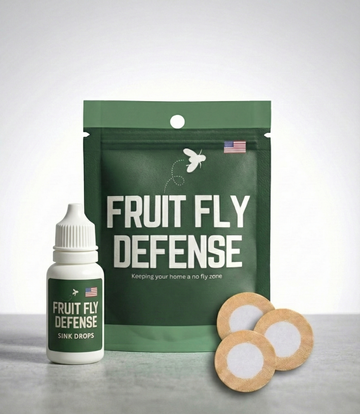
The COMBO PACK provides the complete solution: professional deterrents for adult elimination plus enzymatic drain treatment for breeding site control—everything needed for a comprehensive IPM program.
ROI Analysis: Prevention vs. Remediation
Let's compare the costs:
Reactive approach (traditional pest control after violations):
- Monthly pest service: $150-$400/month = $1,800-$4,800/year
- Average violation fine: $500
- Product loss during infestation: $200-$800
- Re-inspection fees: $200-$500
- Total annual cost: $2,700-$6,600+ (not including reputation damage)
Proactive prevention approach:
- Initial setup with COMBO PACK: One-time investment
- Monthly drain maintenance with SINK DROPS: Ongoing prevention
- Supplemental traps as needed: Minimal ongoing cost
- Total annual cost: 60-70% less than reactive approach
- Zero violations, zero fines, zero reputation damage
Implementation Checklist for Restaurant Managers
Week 1: Immediate Action
- Conduct full facility inspection for breeding sites
- Deploy POWER UP PACK in all high-risk areas
- Treat all drains with SINK DROPS
- Train staff on daily prevention protocols
Ongoing: Prevention Maintenance
- Weekly drain treatments (every Friday after close)
- Daily closing checklist enforcement
- Monthly trap inspection and replacement
- Quarterly facility audit for new risk areas
Bulk Solutions for Multi-Unit Operations
Managing multiple locations? We offer commercial bulk ordering for restaurant groups, hotel chains, and food service management companies. Our wholesale program provides:
- Volume pricing for multi-unit operations
- Consistent supply chain for standardized protocols
- Support for corporate food safety compliance programs
- Customized implementation guidance for your specific operation
Contact our commercial team to discuss bulk pricing and implementation support for your operation.
Conclusion: Prevention Is Always Cheaper Than Remediation
In 2026, with health scores posted online and social media amplifying every customer complaint, fruit flies aren't just a health code issue—they're a business survival issue. The restaurants and bars that thrive are those that implement proactive, professional-grade prevention systems.
Don't wait for a violation to take action. Start with our COMBO PACK for comprehensive control, or contact us for a customized commercial solution.
Your reputation—and your bottom line—depend on it.